In this article
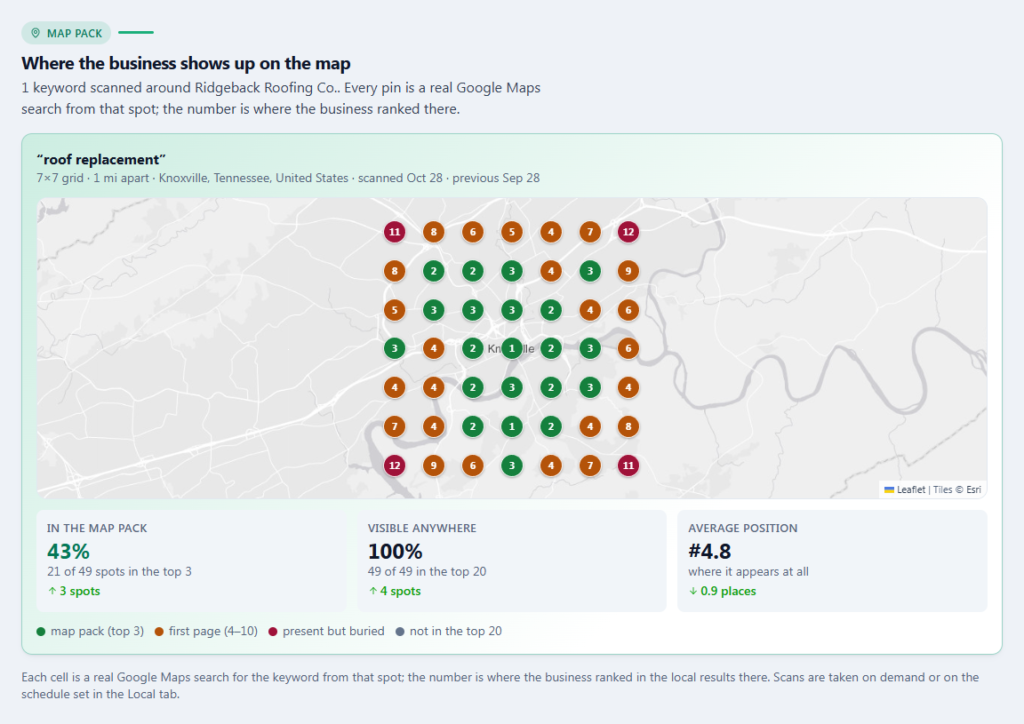
When a homeowner’s water heater quits, they search on a phone, look at the map and call one of the first few names they see. Local SEO for contractors is the work of being one of those names.
Most of the advice on this topic is written to sell you a monthly retainer. Google’s own explanation is much shorter. It says local results are based mainly on relevance, distance and prominence. It also says plainly that you can’t request or pay for a better local ranking. Everything worth doing fits under those three words.
Relevance: tell Google exactly what you do
Relevance is how well your business matches the search. A company that lists itself as a “general contractor” and has one services page will struggle to show up for “metal roof repair,” even if that’s half of its work.
- Choose the most specific primary category on your Google Business Profile. Add secondary categories only for work you actually sell.
- List your services on the profile in the words customers use.
- Give each main service its own page on your website. A page about roof replacement and a page about roof repair answer two different searches.
Write each page for the person who has that problem. Say what the job involves, what affects the price, how long it usually takes and what happens after they call. A page that could be pasted onto a competitor’s website with only the name changed won’t do you much good.
Distance: be honest about where you work
You can’t change where a searcher is standing, so don’t spend money fighting it. You can make it clear which towns you serve.
If customers don’t come to your shop, set up your Google profile as a service-area business and list the areas you really cover. Then build pages for the towns that matter most, and put something true and local on each one: the type of homes you see there, the work you do most there, or recent projects. Forty town pages with the same paragraph and a swapped city name are a waste of everyone’s time, including Google’s.
Prominence: become the company people talk about
Prominence is how well known you are. Google says that includes links from other websites and how many reviews you have, and that more reviews and positive ratings can help.
Reviews are where most contractors can pull ahead fastest, because most companies ask only when they remember to. Make the request a step in closing out the job.
- Send a text with your review link the day the work is finished, while the customer is still happy.
- Reply to every review, including the bad ones. Keep it short and never argue.
- Don’t offer discounts or gifts for reviews. Google’s policies prohibit paying for them, and a suspended profile costs far more than a slow month.
For links, start close to home. Your suppliers, manufacturers you’re certified with, the local chamber, trade associations and the youth team you sponsor can all link to you, and those links are real.
The details that quietly cost you calls
Three problems show up again and again when we look at contractors’ sites.
Inconsistent business information. Your name, address and phone number should match everywhere: your website, Google, Facebook and the directories. Use one public phone number across all of them. Google warns that inaccurate information can keep a profile from appearing for relevant nearby searches.
A slow website on a phone. Your customer is probably standing in a wet basement. If the page takes forever to load or the phone number is hard to tap, they’ll go back and call the next name.
A form or number nobody watches. Ranking only gets the phone to ring. If calls go unanswered, you’ve paid for your competitor’s lead. We wrote a separate guide on what to do about missed calls.
What to do first
If you’ve got one free afternoon, work through this list in order.
- Claim your Google Business Profile, then fill in every field that applies.
- Fix your name, address and phone number on your website and your biggest directories.
- Write one strong page for the service that makes you the most money.
- Text your last ten happy customers and ask for a review.
- Run an audit below to see what else is holding your site back.
How long does local SEO take to work?
Longer than anyone selling it would like to admit, and no honest person can give you a date. Profile fixes and new reviews can move things fairly quickly. Competitive services in larger metro areas take sustained work, often over many months. What you can control is whether the work gets done every month and whether you’re measuring calls instead of just rankings.
That’s the job we built RankLocker’s local SEO tools to do. It plans a page for each service and city, shows which ones you’re missing, checks your listings against about 16 directories, and shows the real searches you appear for. You run it yourself, so you always know what’s been done. If you’d like to see how you stack up against other software first, we have side-by-side comparisons.
Questions contractors ask about local SEO
Can I pay Google to rank higher on the map?
No. Google says there’s no way to request or pay for a better local ranking. Ads can appear near the map, but they’re marked as sponsored and they’re a separate product.
Do I need a website if I have a Google Business Profile?
You’ll get more from the profile with a website behind it. The site gives you room to explain each service and town, and it gives homeowners a reason to trust you with an expensive job.
Should I use a different phone number for each ad or directory?
No. Keep one public number everywhere so your business information stays consistent.