In this article
You drove out, measured everything, wrote a good estimate and emailed it over. Then nothing. You send one “just checking in” text, hear nothing back and move on.
Many of those jobs weren’t lost. The homeowner got busy, couldn’t get their spouse to sit down, or felt awkward telling you they were still deciding. Good follow-up gives them an easy way to answer, and it starts before you leave the driveway.
The follow-up starts at the kitchen table
Set the expectation at the start of the appointment. Before you pull out a tape measure, tell them how the visit will go:
I’ll look everything over, walk you through what I’d recommend and give you the price. At the end, I’ll ask whether it’s a yes or a no. Either answer is fine. I just don’t want to leave you wondering. Fair enough?
Asking permission up front changes the ending. You aren’t springing a close on anyone, because they already agreed to it.
When you finish, ask for the decision. If they need time, don’t just say “no problem” and leave. Ask what they need to decide and when they’ll have it.
What’s the one thing you still need to figure out? And if I check back with you on Thursday, will you have what you need by then?
Now your follow-up isn’t an interruption. It’s an appointment they agreed to.
Why “just checking in” doesn’t work
“Just checking in” gives the homeowner work to do and nothing in return. They have to remember your estimate, form an opinion and decide how to tell you. The easy choice is to ignore it.
Every follow-up should do one of three things: answer a concern, add something useful or make it easier to decide.
A simple follow-up schedule
Use this as a starting point and adjust it to the size of your jobs. A $900 repair and an $80,000 addition shouldn’t get the same treatment.
- Same day: Send the estimate with a short thank-you, and restate the one thing they said mattered most.
- The day you agreed on: Call. If they don’t answer, leave a brief message and send a text.
- About a week later: Send something useful, like photos of a similar job or an answer to a question they raised.
- About two weeks later: Ask directly whether the project is still on their list.
- About a month later: Send the closing-the-file message below.
- Every few months: Stay in touch. People who didn’t buy this spring may be ready next year.
What to say at each step
After the appointment:
Thanks for having me out today, Maria. Here’s the estimate we talked about. I noted that keeping the kitchen usable during the work was your biggest concern, so that’s spelled out on page two.
When you’ve got something to add:
Maria, you asked how the new cabinets would look against that floor. Here are two photos from a job with a very similar color.
When it’s time to close the file:
Maria, I haven’t heard back, so I’m guessing the timing isn’t right or you went another way. Either is completely fine. Should I close this out, or would you like me to check back in the spring?
That last message tends to get replies when nothing else has. It takes the pressure off and asks a question that’s easy to answer.
A no is worth more than a maybe
A maybe sits in your pipeline, takes up your attention and makes your forecast fiction. A no lets you ask the most valuable question in sales:
I appreciate you telling me. Would you mind sharing what tipped the decision? It helps me do better.
Write the answers down. If you keep hearing the same reason, you’ve learned something about your price, your presentation or your timing. You’d never have heard it from someone who stopped replying.
Make the follow-up happen without relying on memory
Almost nobody fails at follow-up on purpose. A busy week comes along, and the plan lives in your head. Two fixes solve most of it.
- Keep one list of open estimates, with the next step and date on every one. If an estimate doesn’t have a next step, it’s already being forgotten.
- Automate the routine touches. Keep the calls personal, and let reminders and check-in messages run on their own.
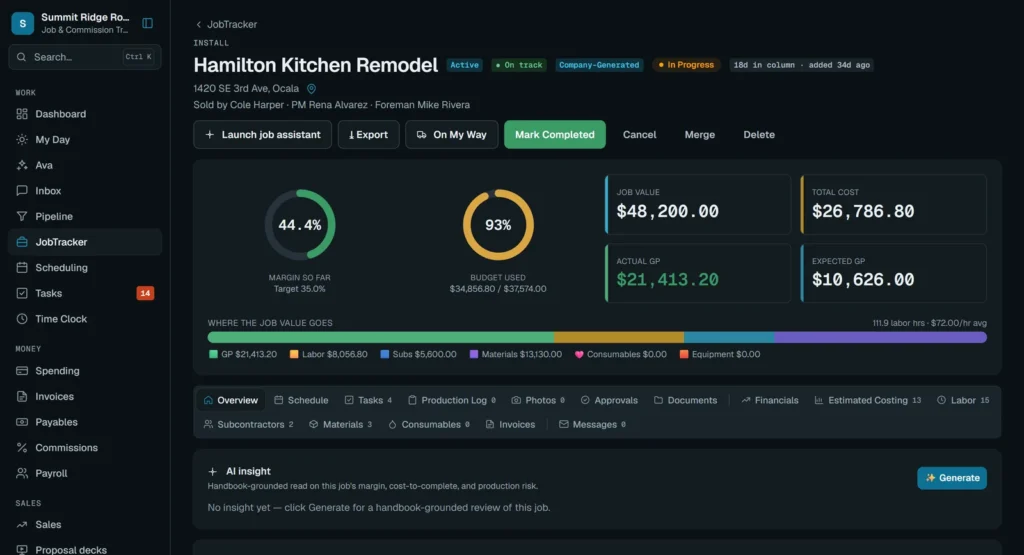
Not sure follow-up is even your biggest leak? Our 9-question scorecard shows whether you’re losing sales at the first impression, in the consultation or in the follow-up. If you sell at the kitchen table, see how in-home sales in JobTracker keeps the presentation, options and signature in one place. WeekendCRM can run the follow-up steps for you.
Estimate follow-up questions
How many times should I follow up on an estimate?
Keep going until you get a clear answer, within reason. A planned sequence of several helpful touches over about a month works well for most residential jobs, followed by occasional contact.
Should I text or call?
Call for the important conversation and text for quick, easy-to-answer messages. Ask customers which they prefer, and honor any request to stop contacting them.
Should I offer a discount to get a reply?
Not by default. Find out what’s actually holding them up first. Cutting your price before you know the objection trains customers to wait for the next cut.